A new report from the Manhattan Institute, a conservative think tank, has declared “The End of the Segregated Century.” Unfortunately, this is an overstatement: segregation has declined, but it is not at an end. And the significance of the decline is up for debate.
The report, by economists Edward Glaeser and Jacob Vigdor, has garnered substantial media attention, including a write-up in The New York Times. It rightly claims—as is widely known, in a large part thanks to Glaeser’s and Vigdor’s work—that the segregation of African Americans in the United States is down from its all-time peak in 1970.
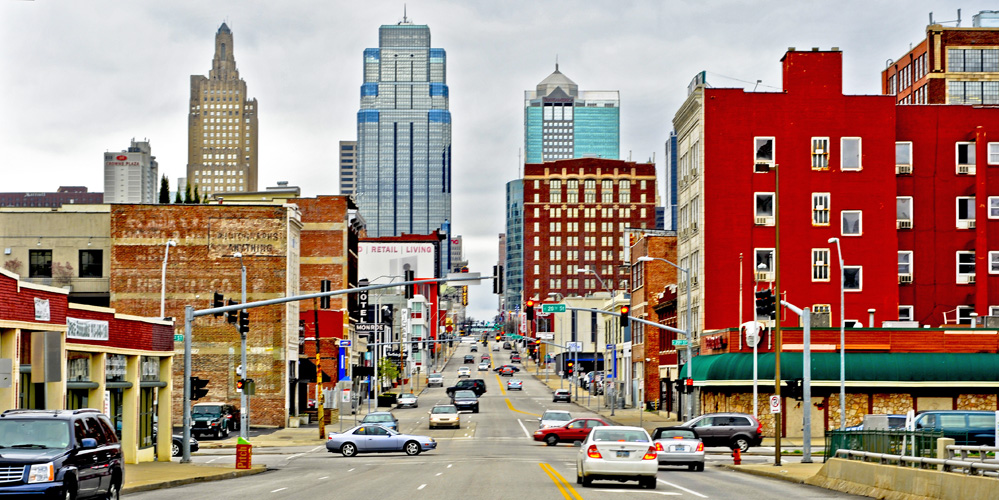
But segregation remains remarkably present. Calling the decline a “success story,” as Glaeser has elsewhere, implies a tragically low standard for success. As Jonathan Rothwell of the Brookings Institution has reported, a majority of African Americans still live in “hypersegregated” metropolitan areas (such as Detroit), where at least 60 percent of the African American population would have to move in order to be evenly spread in the metropolitan area. Ninety-five percent of African Americans live in at least a moderately segregated metropolitan area (such as Kansas City), where 40 percent of blacks would have to move to achieve integration.
So we are not at the “end of the segregated century,” even though segregation has substantially declined.
What is more, the changes that have occurred likely seem of little consequence to blacks living in ghettos that, while smaller than 40 years ago, are still massive.
In evaluating the level of segregation, we need to think about why we sought to end segregation in the first place—that is, we have to consider whether the reduction is having an impact on the negative outcomes of segregation. And it turns out segregation has declined in a manner that is unlikely to reduce its pernicious effects.
There are at least three reasons why the United States, as a matter of public policy, was and should continue to be committed to ending segregation.
First, segregation was built by denying a group of people the fundamental freedom to choose where to live. In this respect, the decline in segregation is at least a partial success story. The state-sanctioned discrimination that helped construct the American ghetto has largely been eliminated. Restrictive covenants are long dead and strict government oversight of the real-estate industry has curtailed practices reinforcing segregation. Moreover, as Glaeser and Vigdor argue, it appears that the economic forces that contributed to segregation, such as unequal access to credit, have diminished as well.
While the isolation of African Americans has declined since its peak, very little of the decline has been caused by integration with whites.
Second, diversity builds a better society and rears better individuals. There is a good deal of evidence that people raised in diverse, tolerant communities are more likely to be tolerant when they grow up. And, importantly, organizations such as schools and businesses are more efficient, innovative, and profitable when comprising a diverse body of individuals. Neighborhoods and cities, too, benefit from a diverse population, as Glaeser has persuasively argued elsewhere. Segregation denies cities the advantages of diversity. In this respect, the decline in segregation is far from a success. As I noted last fall, the exposure of whites to African Americans in their own neighborhoods still lags far behind the population share of African Americans in the nation as whole. The same is true for the exposure of African Americans to whites—especially for the large portion of African Americans living in hypersegregated cities.
Finally, segregation separates the powerful from the marginalized, a crucial fact that Glaeser and Vigdor ignore. Segregation divides a group of people that controls politics, business, policing, health care, education, and nearly every other aspect of American life from a group that lacks influence in these domains. The results of this division are too many to address, but there is no doubt that racial segregation has contributed enormously to the failure of urban education, the racial imbalance in incarceration, and endemic health problems in the African American community, to list but a few examples.
To eliminate the contribution of racial segregation to these social ills, society must integrate the powerful, that is whites, with African Americans and other racial minorities. But this is not what has been happening. While the isolation of African Americans has declined since its peak, very little of the decline has been caused by integration with whites. Instead integration of African Americans with other racial minorities is responsible for more than 75 percent of the newfound diversity in neighborhoods where African Americans typically live. Since 1980 the percentage of whites living in the neighborhood of a typical African American has ticked up just a few points—at least, according to the method used in the Manhattan Institute report; other data show a slight decline in exposure—while the presence of Hispanics and Asians in the same neighborhoods has grown by twelve percentage points. Reflecting this pattern, sociologists Sean F. Reardon and Kendra Bischoff have shown that while the segregation of African Americans has moderately declined in the last 40 years, income segregation has grown dramatically over the same time period. The powerful and less powerful, haves and have-nots, remain separated.
The mixing of racial groups is both desirable and beneficial, and the United States has made great strides in this respect, but as long as the integration of African Americans is accompanied by the continuing separation of white and non-white, the tragic consequences of segregation will remain.