Are we living in an interregnum? Ever since the reascension of Donald Trump, and especially after the United States and Israel launched their war against Iran, left commentators have increasingly invoked Gramsci’s aphorism—an old world dying and a new one struggling to be born—to foretell American decline. On the one hand, such language is useful as a kind of shorthand for historical uncertainty, able to capture both the exhaustion of an existing order and the inability to name what comes after it. Yet at the same time, phrases like these tend to make the transition sound abstract, almost metaphysical, as though the future were unfolding somewhere above politics rather than in the material spaces where war, commerce, geography, infrastructure, and law meet.
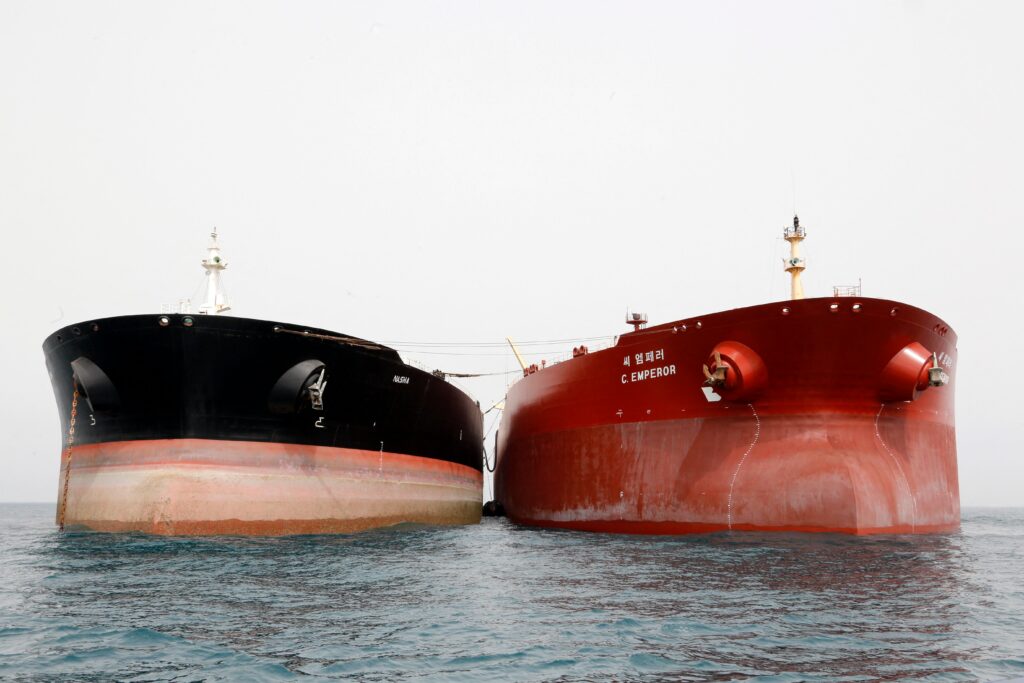
The Persian Gulf is one such space, and the Strait of Hormuz, the narrow waterway connecting it to the rest of the world, is the eye of the storm. Far more than a passageway for barrels of crude, Hormuz is a critical node in a network of global economic systems. Not only does Hormuz connect energy, liquefied natural gas, petrochemicals, and fertilizer to world markets; in the process, it shapes insurance, shipping, sovereign wealth, aviation, tourism, food systems, and debt structures across the globe. When one energy route is interrupted, risk gets redistributed across many systems at once. A threat to tankers in one part of the world can translate into fertilizer shortages thousands of miles away, lowering yields on what farmers plant and triggering food scarcity and inflation, which in turn produces sovereign debt distress. From the United Kingdom to India, such shocks can cascade into political crises in countries with no role in the original war.
The United States remains powerful enough to break things but is increasingly unable to stabilize the aftermath of its rampage.
It’s for this reason that the tense standoff in the Gulf since the ceasefire in early April has revolved around the Strait of Hormuz as both chokepoint and bargaining chip: Iran leverages the threat of disrupted passage, and the United States treats restored transit as the measure of de-escalation even as it imposes its own naval blockade. That the war in Iran has been a catastrophic blunder is now a consensus position in the United States, as the recent House vote to end the war makes clear. But that belated realization can do little to alter the damage wrought. The course of events set in motion by February’s decapitation strikes on the Iranian regime has settled into a ceasefire that is not merely a pause in hostilities—and, as each side continues to trade blows, is not even reliably that. It should be understood instead as generative, a prelude to an emerging, deeply precarious realignment. Here, in the ceasefire that has secured neither peace nor war, in the Strait of Hormuz that is neither open nor closed, in the Gulf states that are neither fully aligned nor neutral, we can see the beginnings of a future world coming into view. What are the initial contours of that world? What forms of power are beginning to harden within it?
Only by looking closely at each overlapping feature of the new order—part might-makes-right, part spheres-of-influence, part transactional hedging, and part hubris-driven late-phase unipolarity—can we understand how the pieces fit into one another. One thing, at least, is immediately certain: today’s landscape is one in which the United States, still holding fast to its position at the top of the global order, remains powerful enough to break things but is increasingly unable to stabilize the aftermath of its rampage. Instead, the very force that claimed to guarantee the system has become the principal accelerant of its unraveling.
One distinctive feature of the Iran war is how it has swung back and forth between a military confrontation and an economic one—so often and so rapidly that the distinction between the two categories has collapsed. For decades, the United States has treated sanctions, export controls, financial isolation, asset freezes, tariffs, and blockades as instruments short of war, or at least as tools that gave Washington coercive power without triggering the legal constraints on kinetic force. To the states that live under those measures, though, the distinction has always been less convincing. For the likes of Cuba and Iran, and before them Venezuela and Iraq, economic coercion is nothing less than an attack on sovereignty, development, technological capacity, and social life. When the United States uses its command over finance, shipping, insurance, and supply chains to weaken adversaries, it describes the practice in terms of national security, not aggression. Yet when those adversaries respond by turning their own positions in the global economy into leverage, Washington charges them with escalation. For the nations looking anxiously toward the Strait, the Iran war has made plain that the collateral damage of “economic warfare” may be global.
The war has swung between a military confrontation and an economic one so rapidly that the distinction between these two categories has collapsed.
For its part, Iran has made use of the ceasefire to preserve the leverage it has gained through Hormuz, demonstrating that a state outmatched in conventional terms can impose global costs by making ordinary commerce uncertain. Tehran did not invent the weaponization of global interdependence in closing the Strait of Hormuz. Having long suffered sanctions, threats, sabotage, assassinations, and military encirclement, it responded to direct attack by resorting to the leverage American planners had long known it possessed but heretofore refrained from using, shifting the battlefield to the infrastructures on which the global economy depends. Wildly outmatched militarily by two of the world’s most powerful nuclear-weapon states, possessing neither the ability to defeat its aggressors nor even defend its territory, Iran had few other choices.
Pete Hegseth, the United States’s self-styled “Secretary of War,” bragged in March that the war was never meant to be a “fair fight”—a truth that Iran well understood. To withstand the war, Iran does not have to defeat the U.S. Navy. It has only to make shipowners, insurers, energy traders, port authorities, fertilizer buyers, and governments doubt the navigability of the sea lanes in the vicinity of Iranian territorial waters. In an integrated world, normality is a strategic asset, and its suspension can be more powerful than any single military exchange.
The war’s shocks also reveal a new geopolitical divide that cuts across the usual divisions of ally and adversary. With a distant chokepoint turned into a battlefield by a purported ally, states dependent on imported fossil fuels have discovered that sovereignty can be constrained not only by debt, sanctions, or military threats by adversaries, but by the inability to keep fuel in gas stations, schools open, factories supplied, and households powered. The countries most exposed to Gulf oil and gas—including large economies like India and South Korea and smaller but more vulnerable economies like those of Bangladesh, Ghana, Kenya, Pakistan, the Philippines, Somalia, Sudan, Thailand, and Vietnam—may want the war to end, but they cannot easily pressure Tehran or Washington to make that happen. For much of the world, the war is a reminder that energy dependence and the material vulnerability it produces is a painful constraint on formal sovereignty.
That lesson will not be forgotten when or if the war ends. States possessing domestic renewable capacity or alternative fuels—Brazil with its hydroelectric and biofuel base, Morocco with its solar and wind investments, Ethiopia with its hydropower—have more room to maneuver. Their choices will likely accelerate a durable redistribution of power. The United States is offering its allies more hydrocarbons, more military protection for hydrocarbons, and more dependence on the security architecture that made Hormuz vulnerable in the first place. China, by contrast, dominates the supply chains for solar panels, batteries, electric vehicles, and the infrastructure of energy systems that cannot be mined, blockaded, or closed at a strait. Many U.S. allies might conclude that the path out of geopolitical dependence runs less through U.S.-secured oil routes than through energy systems the United States neither controls nor leads.
Join our newsletter
New pieces, archive selections, and more straight to your inbox
That shift would have monetary consequences as well as strategic ones. The old bargain that helped sustain the petrodollar rested on a simple proposition: Gulf energy would move through U.S.-protected routes, and global energy trade would remain anchored in dollars. But if U.S. protection no longer guarantees access, and if the route out of vulnerability lies in supply chains organized increasingly around China, states will have reason to reduce not only their dependence on Gulf hydrocarbons but also their exposure to the dollar-denominated financial architecture that accompanied them. The result may not be a sudden abandonment of the dollar, but a gradual thinning of its monopoly: more bilateral settlement in local currencies, more energy contracts priced outside the dollar, and more reserves held as insurance against the coercive power of the system the petrodollar once stabilized.
American primacy in the Gulf was supposed to make the region safe for the world economy. Instead, it now looks to have produced a security architecture that has made the region permanently targetable. Military bases, arms sales, sanctions regimes, intelligence cooperation, and Israeli freedom of action were central pillars of a Middle Eastern Pax Americana. Yet in this war, those same pillars have transmitted violence across the region. Those Gulf states that initially opposed the war were struck because they hosted American forces and have now been drawn into the fighting. A system (ostensibly) designed to secure the Gulf has made the Gulf into a battlefield.
The United States justified the war through the claim that Iran’s nuclear capabilities posed an intolerable danger and that military force could solve what diplomacy had failed to resolve. To be sure, this spring’s airstrikes may have compounded the damage to Iranian nuclear facilities previously bombed by the United States and Israel last June. Additional scientists have likely been killed, supply chains disrupted, and timelines for Iranian nuclear development delayed. But none of this eliminates the knowledge, industrial experience, or security incentives that led Iran to seek nuclear latency in the first place. Worse, the war has proven a logic that deals a death blow to nonproliferation: only countries with a nuclear deterrent, like North Korea, can avoid attack.
Iran has now twice been subjected to aerial bombardment by nuclear weapons states even as it was conducting nonproliferation negotiations. The Iran war adds to the ledger of non-nuclear weapons states attacked after forgoing weapons programs: the invasion and occupation of Iraq following its disarmament, the bombardment of Libya after it surrendered its weapons ambitions, and the invasion of Ukraine after it relinquished its inherited nuclear weapons. Under the Joint Comprehensive Plan of Action (JCPOA), the 2015 nuclear agreement it negotiated with the Obama administration, Iran accepted intrusive monitoring of its uranium enrichment in exchange for the promise of sanctions relief and reintegration. Yet after the Trump administration unilaterally withdrew from the agreement and reimposed sanctions on the country, the information the United States gained from that monitoring helped create the strategic environment in which Iranian targets could be identified and struck.
For the nuclear threshold states looking on, the lesson couldn’t be clearer: not only is disarmament risky, but compliance also creates vulnerability.
Where Iraq and Libya damaged the nonproliferation bargain by teaching weak states that disarmament does not buy security, the case of Iran—a state that has been punished even as it followed the rules—threatens to break it entirely. For the nuclear threshold states looking on, the lesson couldn’t be clearer: not only is disarmament risky, but compliance itself may create vulnerability. Iran demonstrates that a latent nuclear program is dangerous enough to invite preventive war while remaining insufficient to deter it.
The strategic objectives of the United States in attacking Iran remain murky, while for Israel the goal appears to be crushing Iranian defense and industrial capacity at a time when that country’s allies in Palestine and Lebanon are too weak to pose a significant threat. But if shoring up nuclear nonproliferation was ever among the United States’s aims, its actions will likely be remembered instead as having brought about the opposite: a critical juncture that permanently undermined the nonproliferation treaty regime globally. The basic bargain of that treaty rests on a credible belief that compliance will enhance security. The Iran war, following years of Washington eroding that belief, has shredded what little credibility remained.
For decades, Iran had sought to deter a war on its territory in the wake of the Iran-Iraq war through a layered set of defensive strategies to manage risks from hostile Gulf neighbors, Israeli threats, Western sanctions, and the military campaigns waged across the region under the rubric of a “war on terror.” These policies were calibrated in various ways, including efforts to build a detente with the Arab Gulf states, negotiate around the nuclear file with the U.S. government, and invest in regional allies like Hezbollah and Hamas to produce fear-based stability with Israel. Following the first Trump administration’s withdrawal from the JCPOA and Israel’s revision of its military strategy post–October 7, Iran’s deterrence was greatly weakened, but the dispersion of its military assets and its geostrategic location relative to Hormuz should still have tipped the risk-benefit calculus against an attack.
The Iran war has now scrambled the security architecture of the Gulf as a whole. Iran’s layered deterrent did not prevent attack, but nor has American and Israeli escalation compelled Iranian capitulation. The result is a region in which every actor may conclude that, in order to be safe, it must become more dangerous. Iran’s new leadership may invest in hardening their defenses—and eventually, may reconsider the nuclear threshold. Gulf states may pursue new defense partnerships, missile systems, and hedging strategies, with Saudi Arabia and perhaps others seeking a nuclear option of their own. Israel may intensify its doctrine of repeated degradation, seeking to keep every adversary weak through periodic destruction and incremental expansion of its own borders. The United States may reach again for the next coercive instrument, convinced that one more escalation will win the result the last one failed to deliver. What follows may be an arms race conducted across military, economic, legal, and infrastructural domains.
The United States repeatedly assumes that pain produces submission. Sanctions will make populations turn against regimes; assassinations will fracture leadership; bombing will compel negotiation; blockades will force capitulation; humiliation will soften an adversary for a deal. Trump, flummoxed that the Iranians are not sticking to his preferred script, has plaintively remarked to journalists that all Tehran needs to do to end the war is “cry uncle.” But coercion is rarely exercised against a blank slate. The target societies’ own histories, institutions, memories of prior violence, and political scripts mediate the experience of coercion and imbue it with meaning of their own making. Suffering can just as easily harden a political order as dissolve it. Decapitation strikes may paralyze a society suddenly bereft of its leadership or they may elevate a new class of more aggrieved and militarized leaders, creating a new line of succession to the detriment of moderates. Economic pressure can teach a state how to survive outside normal channels. Trump has continued a familiar U.S. habit of treating coercion as an input and compliance as the expected output. Its adversaries often experience the same coercion as proof that compromise is weakness and that only endurance, autonomy, or deterrence can preserve sovereignty.
Playing a key role in sustaining the coercion fantasy is Israel, whose own regional doctrine rests on the premise that adversaries can be managed through periodic destruction: infrastructure degraded, commanders eliminated, supply lines severed, territory occupied and even seized, and political horizons narrowed until the adversary is left with no choice but acquiescence or exhaustion. But Israel’s scorched-earth tactics in Lebanon have complicated Trump’s negotiation strategy. Tehran has made clear, especially over the past week, that it views Israel’s war in Lebanon as part and parcel of the same strategic campaign that targets Iranian territory, and that Hormuz gives it leverage to demand limits on Israeli attacks on both countries. Iran’s insistence on folding Lebanon into the ceasefire talks is significant precisely because the scale of Israel’s destruction there has been met with so little effective international constraint: thousands killed, and many thousands more injured, over a million displaced, repeated attacks on medical infrastructure and personnel, and the demolition of entire neighborhoods and villages in the south. Iran’s response has effectively regionalized the terms for any lasting truce. Moreover, that insistence appears to have produced some friction inside the U.S.-Israeli alignment, with Trump reportedly pressing Israel to scale back further attacks on Beirut and publicly describing Netanyahu as “crazy” for escalating in ways that undercut U.S.-backed negotiations.
The divergence between American and Israeli interests may no longer be a marginal question.
Trump’s tense conversation with Netanyahu reflects the degree to which Israel’s regional strategy carries costs that Israel does not fully bear. Israel may view repeated degradation as a way to create strategic depth. The destructive consequences of this approach are first and foremost sustained by civilians in the countries subjected to Israel’s “mow the lawn” strategy. But the Iran war has shown that Washington, too, absorbs the consequences in global markets, naval deployments, munitions stockpiles, alliance management, legal credibility, and even its own domestic politics. It is the United States, rather than Israel, that is expected to stabilize the global economic order disrupted by Hormuz, sustain the naval presence required to protect Gulf commerce, and manage the wider military and fiscal costs of a war whose price tag may approach a trillion dollars.
The divergence between American and Israeli interests may thus no longer be a marginal question. Where the old American regional formula treated Israeli military dominance and Gulf stability as mutually reinforcing pillars of order, the messy outcome of the war suggests that they may now be increasingly at odds. Israeli freedom of action can impose intolerable costs on Gulf states and on the United States itself. A regional order organized around Israeli impunity requires levels of coercion that are accelerating American decline. The Gulf states understand this, though each nation is drawing different conclusions. The UAE appears to be moving toward a harder strategic-autonomy posture, deepening security cooperation with Israel, reconsidering multilateral commitments, leaving OPEC, and presenting itself as a state that will not remain bound by institutions that fail to protect it. Reports suggest that the UAE has been directly engaged in the war from the outset, landing its own strikes on Iran and charting a new course for its regional security posture. Saudi Arabia, by contrast, has occupied more of a public position of restraint, warning against being dragged into war and exploring deeper relationships with Pakistan, Turkey, Egypt, China, and others, while also preserving ties to the United States.
Can we call the world that is emerging a post-American one? Not exactly—but at the same time, long-held assumptions about alliances, security, and stability are collapsing. The Gulf is internally divided and unstable. The UAE and Israel may stand at one pole of the new architecture, bound by technology, air defense, intelligence, investment, and shared hostility to Iran. Saudi Arabia sits uneasily elsewhere, unwilling to accept Iranian dominance but equally wary of being folded into an Israel-led order while trying to manage its tense relationship to the UAE. Despite reports that, like the UAE, Saudi may also have participated in covert strikes against Iran, Riyadh’s public neutrality sets it apart from Abu Dhabi’s bellicosity. In between these pressures, Turkey and Pakistan may become more relevant as military and diplomatic balancers, with China as an economic partner and energy consumer, though not yet a security guarantor. The resulting configuration is a spectrum of hedged bets, assembled through improvisation under fire.
In this sense, the impasse in the Gulf reveals a broader set of truths. For now, no power can directly challenge or constrain the United States, yet American guarantees have visibly eroded and new spheres of influence may already be emerging to replace them. Economic coercion has become so normalized that neither its practitioners nor its targets can easily distinguish it from war. Multilateral institutions—OPEC and the GCC locally, the UN system more broadly—have been hollowed out. Nonproliferation has been overtly undermined, the war having demonstrated that only nuclear deterrence can reliably prevent attack. And the hard line between war and peace—the most basic ordering distinction of the postwar international system—has dissolved into a ceasefire that is neither.
In this new world, the language of old rules persists, but does not constrain. The United States still speaks as guarantor of the commons while disrupting one of the most important nodes of connection in the world. Israel presents permanent war as security and territorial expansion as necessity. Iran, attacked and sanctioned, has turned geography into leverage while serving as an object lesson that restraint may invite, rather than avert, assault. Gulf states hedge, splinter, and arm themselves. And China waits on the sidelines, carefully observing the United States’s self-inflicted wounds.
Independent and nonprofit, Boston Review relies on reader funding. To support work like this, please donate here.