
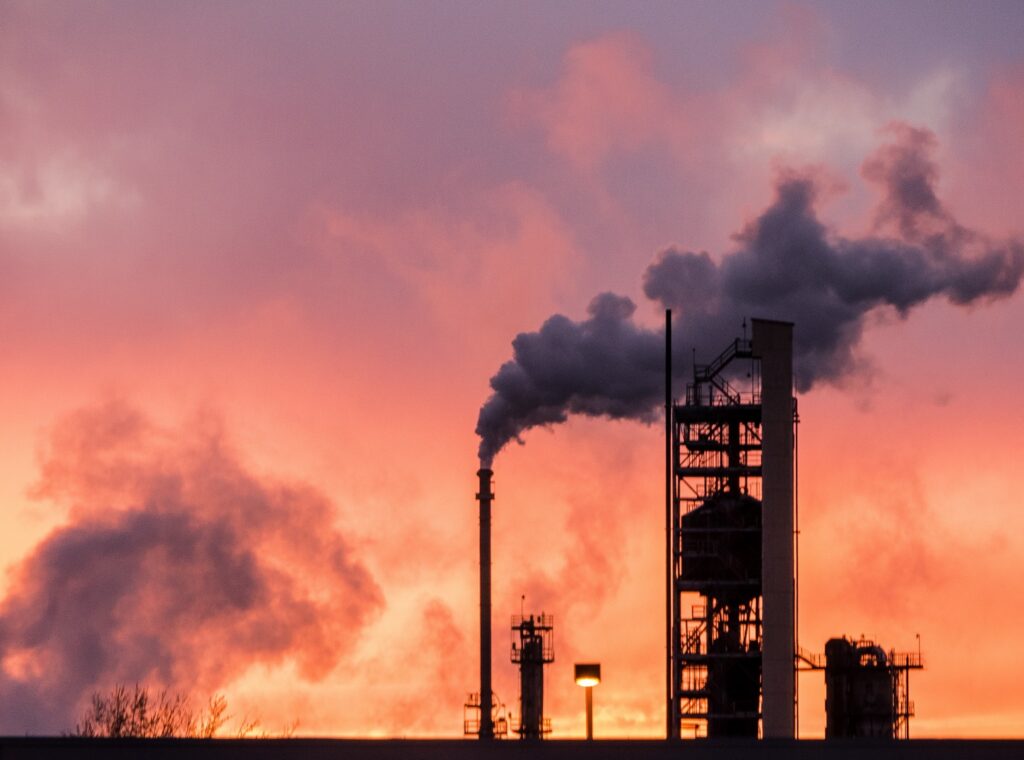
Climate politics are in a very weird place right now.
On the one hand, current events would seem to be fertile ground—perhaps more fertile than ever—for generating popular support for climate action. Renewables are now the most competitive form of electricity generation, meaning a climate agenda can have relatively short-term material benefits for voters. The Iran war has demonstrated the inherent superiority of clean energy over fossil fuels: sunlight does not have to pass through the Strait of Hormuz, and nobody ever went to war over wind. The harmful effects of climate change are also becoming noticeable for millions of Americans who are regularly experiencing summer-ruining heat waves, record-breaking droughts, historically destructive storms, and dystopian wildfires, to say nothing of the financial impacts of this extreme weather, from skyrocketing insurance rates to collapsing property values. And the current administration, which is staffed top-to-bottom with climate deniers and oil and gas executives, is making the corruption and clownishness of the United States’s fossil fuel addiction explicit for all to see. How else to describe “Coalie,” the anthropomorphized mascot of Trump’s “American Energy Dominance Agenda”?
Discussing how best to talk about climate change is a strategic imperative. But nuance isn’t what the hushers are after: they’re telling Democrats not to talk about climate at all.
On the other hand, we are seeing a massive deprioritization of climate across multiple sectors. Businesses have been ditching their previously professed climate pledges and going silent on the issue. Bill Gates has started arguing that “climate change is not the biggest threat to the lives and livelihoods of people in poor countries,” amplifying a false dichotomy between efforts to decarbonize the economy and efforts to improve human welfare. Politico recently announced it is folding E&E News, its standalone climate and energy outlet; NPR just shut down its climate desk, and Jeff Bezos’s Washington Post laid off its climate team earlier this year. Meanwhile, a host of think tanks and pundits—mostly corporatist outfits like WelcomePAC, the Searchlight Institute, and the Breakthrough Institute—have been aggressively arguing that Democrats should stop talking about climate change and abandon climate action as a policy priority. And many prominent Democrats are doing just that. New York Governor Kathy Hochul’s successful push to water down her state’s signature climate law has gotten the most attention, but similar efforts have been pursued by California’s Gavin Newsom, Rhode Island’s Dan McKee, and other politicians at both the state and federal levels.
This “climate hushing,” as it has been derisively but accurately labeled, deserves serious examination. Three main arguments have been made.
First, corporate-aligned think tanks—joined by some voices on the socialist left, like Matt Huber—argue that climate is an electoral anchor that hurts Democrats’ chances of regaining Congress and the White House, variously claiming that climate policy is not popular enough, or that it’s popular but not deeply felt enough, or that it’s simply too polarizing to benefit Democrats at the ballot box. As Huber recently wrote in the New York Times, “The Democratic Party remains deeply unpopular. The way out is to stop elevating a litany of single-issue policies that appeal to the already converted. When it comes to climate change, for now, it might be better to say nothing at all.”
Second, and closely related, it has been argued that Democratic advocacy on climate has pushed working people away from the party and that rebuilding a working-class base requires essentially dropping or deprioritizing the fight for climate action.
Third, in a quite different vein, some climate advocates themselves have argued that at a time of authoritarian takeover, we need to prioritize fighting fascism over a focus on climate. This is not so much an argument for “hushing” as a brief for reorienting the climate movement. As the executive director of the Sunrise Movement, Aru Shiney-Ajay, wrote in March, the organization “is pivoting to end authoritarianism and win a democracy capable of addressing the climate crisis. We’re still a climate movement, but this moment requires the acknowledgment that climate action is impossible under authoritarianism.”
None of these cases for hushing or pivoting away from climate action really holds up.
The first argument—simply put, that Americans don’t really care about climate change—typically cites public opinion data. Take the Searchlight Institute’s claim, in a research report last September, that “the first rule about solving climate change” is “don’t say climate change.” Founded last year by former Senate staffer Adam Jentleson, Searchlight is funded by billionaires, including hedge fund manager Stephen Mandel and real estate investor Eric Laufer. The think tank preaches “heterodoxy” as the answer to the Democratic Party’s woes, though in practice that has meant enjoining Democrats to distance themselves from positions it deems too progressive and out of step with voters.
In this case, Searchlight concedes that “battleground voters overwhelmingly agree climate change is a problem” but argues that “climate change is not a high priority for most Americans.” For support, the think tank cites a survey it conducted which found that 22 percent of battleground voters listed climate change as one of their top three priorities and 17 percent of these voters say “climate change affects themselves and their family a great deal.” The latter figure doesn’t sound great. But what the survey data actually shows is that an additional 28 percent say climate change affects themselves and their families “a fair amount,” and another 26 percent say it affects them “somewhat.” In other words, just under half of battleground voters believe climate change is personally affecting them at least a fair amount, and more than two-thirds believe it’s personally affecting them at least somewhat.
And that’s just from Searchlight’s own polling. “Anyone can usually find a poll that backs the argument they’re trying to make,” Huber recently observed, noting that the Yale Program on Climate Change Communication (YPCCC) surveys are “some of the most respected.” The YPCCC recently released its annual “Climate Change in the American Mind” report for 2026, which found that majorities of registered voters think global warming is causing the price they pay for goods and services to increase, with 66 percent saying this is true of their home utility bills, 61 percent for groceries, and 51 percent for home insurance.
The survey further shows that many climate policies poll very well. Some 77 percent of voters support regulating carbon dioxide as a pollutant, while 65 percent support transitioning the U.S. economy from fossil fuels to 100 percent clean energy by 2050. More than half of registered voters (58 percent) think that developing clean sources of energy should be a “high” or “very high” priority for the president and Congress, and the same percentage reported that they would prefer to vote for a candidate who supports action on global warming, compared to only 14 percent who’d prefer a candidate who opposes climate action. “There are lots of different lines of evidence that suggest that climate change as an issue overall helps the Democrats and hurts Republicans,” economist Matt Burgess notes. Burgess himself coauthored a 2024 study that found that if climate change had not been an issue in the 2020 election, Republicans might have gained an approximately three-point swing in the popular vote, which would have handed the election to Trump.
Join our newsletter
New pieces, archive selections, and more straight to your inbox
Climate change messaging offers even clearer political opportunities today. A strong majority of Americans are struggling with rising electricity prices. According to the climate hushers, Democrats should only talk about lowering energy prices, leaving climate out of the conversation. As Searchlight writes, “There is a partisan gulf that emerges as soon as you insert the words ‘climate change’ into a sentence.” What this analysis misses is that climate change can help Democrats capitalize on this affordability fight. Neither party has a significant trust advantage on “electric utility bills” (D+1) or “the cost of living” (R+1). But Democrats do have a major trust advantage on “climate change” (D+14). By articulating how their climate agenda can address energy costs—by building out the cheapest power sources and making polluters, not families, pay their fair share—Democrats can leverage their advantage on climate to win voters’ trust on the cost-of-living crisis.
One good example of this kind of message was a recent ad from Lisa Kaul, a Democratic candidate for New York State Senate in the Poughkeepsie area who just won her primary to challenge an incumbent Republican in November. In the spot, Kaul first connects climate change to affordability:
Donald Trump says climate change is a hoax. But climate change is fueling extreme weather. We’re paying more for home insurance. More for our roads and bridges. More for our food. I’m Lisa Kaul, and I’m running for New York State Senate. To make our lives affordable, we have to address climate change.
She then explains how climate policies can deliver material benefits to regular people:
When I get to Albany, I am going to rein in utility policies so we can have affordable solar power on every roof. Let’s help people with the upfront costs of EVs and heat pumps so everyone can enjoy the savings.
None of this is to deny that public opinion around climate could be even more favorable to climate action. The recently released 2026 World Risk Poll report, completed in partnership with Gallup, asked 143,000 people across 140 countries if they think climate change is a “very serious threat,” and then asked if they think most other people in their country view climate change the same way. The United States had one of the largest gaps: about 51 percent of Americans answered that they believed climate change to be a very serious threat, but only 10 percent of Americans thought most other Americans feel this way. This large discrepancy indicates the enormous potential upside of a strong climate message, which can help people understand their concerns are broadly shared.
The popularist case for climate hushing becomes even harder to accept in light of its neglect of popular opposition to AI data centers. Opposing Big Tech’s data center buildout is a profoundly potent political opportunity for Democrats. A recent Gallup poll found that 71 percent of Americans oppose data centers being built in their area. This opposition is bipartisan, deeply felt, and cross-ideological. A significant proportion of the AI buildout is occurring in red states, like Ohio and West Virginia, where data centers have added billions of dollars to household energy bills and drawn serious hostility from Democrats and Republicans alike.
The biggest buildout is happening in Virginia (where Democrats, as the party in power, stand to be blamed) and Texas (where James Talarico is running for a Senate seat). When a conservative voter in Hood County, Texas, was asked, “You’re willing to forgo every conservative issue and let the Senate fall into the hands of Democrats if that’s what it takes to kill data centers?” her response was immediate: “Yep. My entire community’s going to break rank.” Yet Searchlight has recommended that Democrats oppose data center moratoria, proposing that data centers be taxed instead, while WelcomePAC’s report on how Democrats can “decide to win” ignores data centers, citing a poll they conducted last summer that AI was of relatively low importance to voters. The incoherence of these messages with a “popularist” strategy makes more sense when you learn that these organizations are funded in part by some of the Big Tech billionaires behind the AI infrastructure buildout.
The hushers’ second argument—that dropping climate is necessary to rebuild the Democratic Party’s working-class base—was the focus of Huber’s recent Times piece. Only the “Brahmin left” prioritizes climate action, he claims, echoing think tanks like WelcomePAC, which have argued that “highly educated Democratic voters and affluent Democratic voters care more than the average American about issues like climate change.” Such rhetoric, in turn, has created a permission structure for centrist Democratic politicians to justify their retreat on climate as being pro–working class. As Senator Elissa Slotkin, who has pushed back on anti-oligarchy messaging in the party, said in May, “The average American is going to struggle to care about climate change if they can’t figure out how to pay their rent.”
The premise of such statements is that climate and housing affordability are zero-sum or mutually exclusive. In reality, green messaging can go hand in hand with a populist, working-class political program. We often forget that FDR was an ardent conservationist and that environmentalism was written into the heart of the New Deal—indeed, the most popular early New Deal program was the Civilian Conservation Corps, an explicitly environmental project. And the evidence isn’t just historical. Bernie Sanders and Alexandria Ocasio-Cortez are two of the most popular politicians in the country, and they’re also two of the most prominent climate advocates in the Democratic Party. Huber claims that Sanders’s 2016 campaign eschewed a strong focus on climate, but this is simply not true. I will never forget the moment during the first 2016 presidential debate when Sanders was asked to name greatest threat to U.S. security and answered:
The scientific community is telling us that if we do not address the global crisis of climate change, transform our energy system away from fossil fuels to sustainable energy, the planet that we’re going to be leaving our kids and our grandchildren may well not be habitable. That is a major crisis.
Sanders campaigned on climate and ran ads on climate. It was all a part of his broader pro-working class message.
There is more at stake here than climate politics. Climate hushers in the mold of Searchlight and WelcomePAC have explicitly opposed economic populism, and they deny the actual reason that working-class voters have fled the Democratic Party: the centrist, corporatist capture of the Democratic Party by big-money interests—Wall Street, Big Tech billionaires, Big Pharma, health insurance companies, and beyond—that have again and again stopped Democrats from taking strong stances on a whole range of supermajoritarian populist issues. (Thus, Searchlight blames Democrats’ 2024 losses squarely on progressive “groups.” Jentleson is right, as he puts it, that “the folks who are most to blame about Trump are the ones who pushed Democrats to take indefensible positions,” but Searchlight and its ilk never extend this analysis to groups like AIPAC or PhRMA that have pushed Democrats to take truly unpopular positions.) To facilitate this denial, climate hushing can serve a valuable scapegoating function. It’s a way to say, “Don’t blame the party’s deference to the billionaire class: it’s the fault of those pesky climate activists and environmentalists.” Despite welcoming “class war,” Huber, too, engages in such scapegoating when he blames the decades-long decline of “working-class politics” on “NGOism” and the “climate and environmental nonprofit world.”
Of course, there really are practices that make it harder for the Democratic Party to appeal to the struggling tenants Slotkin invokes. Democratic leaders in the House stepped in on behalf of private equity to kill a ban on corporate ownership of single-family homes. Kamala Harris ran almost her entire presidential campaign without ever using the words “renters” or “tenants.” But Harris’s failure to appeal to voters who “can’t figure out how to pay their rent” was not a result of her obsession with climate change; she barely mentioned the climate in her campaign. And it wasn’t climate activists who pushed Harris to deemphasize the populist elements of her affordability agenda—it’s been well-reported that she was convinced to do so by her corporate advisers.
The third argument for downplaying climate action—that defeating Trumpian authoritarianism requires shifting focus to democracy—is driven by quite different considerations, internal to the climate movement itself. I agree wholeheartedly that we need to prioritize the fight against authoritarianism. But it’s worth thinking through the assumptions of a strategy that pits that fight against direct confrontation with climate change.
In her March statement, Shiney-Ajay does not argue that climate is unrelated to authoritarianism. On the contrary, she writes, “The Biden administration was a clear lesson for fossil fuels: under a democracy, they will lose their business model. So they’ve made a calculated decision to fund authoritarianism, because under authoritarianism, they win. . . . This is fossil fueled fascism.” This is all true. But it doesn’t follow that defending democracy requires “pivoting” away from climate in the short term. Another conclusion one could draw from Big Oil’s role in promoting right-wing authoritarianism is that democracy can only be won by taking on the fossil fuel industry head on.
To a remarkable degree, the greatest threats to our democracy in recent decades have their origins in efforts to protect the fossil fuel industry from a clean energy transition.
Indeed, to a remarkable degree, the greatest threats to our democracy in recent decades have their origins in efforts to protect the fossil fuel industry from a clean energy transition. Take reporting earlier this spring from the New York Times detailing the origins of the Supreme Court’s “shadow docket,” one of the most authoritarian developments of our generation. The adoption of the shadow docket has allowed the Court’s hard-right majority to make decisions of shocking scope and import with a speed and opacity that profoundly undermine democratic governance—and this corrosive innovation was specifically established in order to stop Obama’s Clean Power Plan. As the Times reported:
When colleagues warned the chief justice that he was proposing an unprecedented move, he was dismissive. “I recognize that the posture of this stay request is not typical,” he wrote. But he argued that the Obama plan, which aimed to regulate coal-fired plants, was “the most expensive regulation ever imposed on the power sector,” and too big, costly and consequential for the court not to act immediately.
As Kate Aronoff has described, Roberts’s arguments to his colleagues rested on exaggerated and unreliable claims from fossil fuel industry-sponsored reports. “For decades,” she concluded, “the profits that flow from the coal, oil, and gas industries have financed the right’s crusade against majority rule.”
It’s equally difficult to talk about the undermining of our information ecosystems and the hyperpolarization of science without discussing Big Oil. These companies understood decades ago that the unchecked burning of fossil fuels would, in the words of their own senior employees’ internal communications, be “globally catastrophic,” do “great irreversible harm to our planet,” have “serious consequences for man’s comfort and survival,” and cause such destabilization that “civilization could prove a fragile thing.” In response to this knowledge, Big Oil began spreading climate denial to block the development of clean energy alternatives—or, in the words of one particularly frank 1988 Exxon strategy memo, they “emphasize[d] the uncertainty in scientific conclusions” to resist the “development of nonfossil fuel resources.” Another Big Oil strategy document, developed in 1998, outlined a multimillion-dollar campaign to make “average citizens ‘understand’” that there were supposed “uncertainties in climate science” until this manufactured doubt was “part of the ‘conventional wisdom.’” The memo laid out a series of “Strategies and Tactics” that included buying off “independent” scientists to spread fraudulent denial, advertising “the scientific uncertainties” in various markets, and even distributing climate denial propaganda “directly to schools.”
This scheme to defraud the public on global warming has proven incredibly successful. While the most recent analysis of peer-reviewed scientific literature on climate found that there is a greater than 99 percent consensus on the existence and causes of man-made climate change, polling shows that only a small minority of Americans think that nearly all climate scientists agree about this reality. But the overall impact of Big Oil’s conspiracy to defraud the public has been even broader. A decades-long campaign to sow distrust in scientific expertise is bound to affect the degree to which Americans trust science and scientific institutions—and, indeed, over the course of the fossil fuel industry’s conspiracy, Americans’ general trust in science has decreased significantly. This trend is overwhelmingly concentrated among conservatives who disproportionately reject the scientific consensus on climate change—a divergence that has been growing since the 1990s, when the climate denial campaign began ramping up.
Then there’s the crisis of money in our politics. The fossil fuel industry has been a key architect in the development of the far-right’s dark money apparatus, pioneering the use of opaque front groups to influence elections. It’s impossible to know the full extent of their influence-buying expenditures, but even their direct spending is enormous. In the 2024 election cycle, oil and gas interests poured $450 million into electing and influencing Trump and the GOP—not quite the $1 billion bribe Trump solicited, but that figure doesn’t include dark-money spending. These companies have also been leading the charge to pass legislation eviscerating plaintiffs’ access to civil courts and criminalizing protests.
In all these ways, Big Oil has played an integral role in facilitating right-wing authoritarianism in the United States. And we can expect that these efforts to tear our democracy apart will only grow more intense in the coming years, as our energy transition becomes more economically inevitable and the tactics needed to suppress that transition become more repressive.
To be fair, there is a weak form of the climate hushers’ argument that is totally reasonable—and, indeed, that climate organizers have long understood and practiced. Global warming is a big, abstract issue, and it’s true that it is generally more compelling to discuss climate change through the prism of concrete negative effects it is having on people’s everyday lives and the concrete material benefits provided by climate action. In California or Florida, that might mean talking about how climate disasters are driving home insurance rates into the stratosphere; in Arizona or New Mexico, it might mean focusing on how summers are becoming unlivably hot; in Utah or Colorado, it might mean discussing the epic drought and water rationing those states are experiencing; in Texas, it might mean pointing to the lethal flash floods or intensifying hurricanes or worsening wildfires affecting more communities every year. And anywhere in the country, one can point to the realities of cheaper, cleaner renewable energy and its potential to lower the price of electricity for all consumers.
Though critics of climate activism like to position themselves as tellers of “tough truths,” the toughest truth is that decarbonizing our economy can’t be done obliquely.
This conversation—how we can most effectively talk about climate change and organize for a clean energy transition—is a strategic imperative. There are lots of important questions we should be asking about how to rebuild a popular climate discourse. But by and large, a nuanced strategic conversation is not the one that climate hushers are trying to spark. They haven’t been saying the climate movement needs to sharpen, refine, or adapt its messaging: they’re saying Democrats need to stop prioritizing, campaigning on, or talking about climate at all. That is a political mistake. Climate fits quite well in the populist framework that most progressives—including climate advocates like myself—believe Democrats should rebuild their electoral coalition around. Big Oil executives are central players in the oligarchy that’s screwing over regular people. The climate crisis is materially harming millions of working-class Americans. Trump is blocking the buildout of cheap clean energy to keep the country hooked on increasingly expensive fossil fuels. The narrative possibilities are clear.
Though critics of climate activism like to position themselves as tellers of “tough truths,” the toughest truth is that decarbonizing our economy can’t be done obliquely. Whether or not Democrats talk about climate, you can bet that Leonard Leo, the Koch network, conservative media outlets, and the fossil fuel industry will keep working to lock us ever deeper into relying on oil and gas. In 2024 Fox News ran more segments on climate change than CBS, ABC, NBC, PBS, and MSNBC combined; all that Democrats achieve by ceding the narrative on climate to the right is to guarantee that MAGA and Big Oil win the debate.
This fact is so obvious that even some proponents of climate hushing, like Searchlight Senior Fellow Jane Flegal, acknowledge it. In her words, “It is hard for me to imagine ‘solving’ climate change as a problem without somebody caring about climate change qua climate change.” Flegal squares the circle with climate hushing by arguing it’s a temporary measure—someday, maybe, things will look different, and we can talk about climate then. The problem is that physics doesn’t care about politics: the more time we take, the greater the likelihood of truly dystopian scenarios. Plus, it’s hard to imagine how a more favorable political context for climate talk could possibly arise without active efforts to build political will now. When white moderates complained in similar fashion about the civil rights movement, Martin Luther King criticized their “mythical concept of time” in Why We Can’t Wait (1964).
We can’t wait when it comes to climate change, either. In the end, this is about whether we are able to maintain organized civilization on this planet. To push the line—now dominant across the corporatist wing of the Democratic Party—that we shouldn’t discuss climate change is not only morally wrong; it carries water for the fossil fuel industry and the forces that got us here in the first place.
Independent and nonprofit, Boston Review relies on reader funding. To support work like this, please donate here.