I visited Ukraine for the first time in October 2013. The country was finalizing an agreement for closer ties with the European Union, and Russia was doing everything in its power to derail the pact. But covering that process was not my purpose. I was on my first assignment as the international LGBTQ+ rights correspondent for BuzzFeed News, and I’d come to report on a proposed “gay propaganda” ban in Ukraine similar to one adopted in Russia earlier that year. The legislation technically prohibited giving information about queer relationships to minors, but it has been used much more broadly to censor expression by LGBTQ+ people.
It turned out, however, that my story was not so separate from the fight over Ukraine’s relationship with the EU. The signs were everywhere, literally. “ASSOCIATION WITH THE EU MEANS SAME-SEX MARRIAGE,” read billboards on the streets of Kyiv, funded by an oligarch close to Vladimir Putin. Opponents of stronger ties with Europe derided the EU as “Gayropa.” Protesters against closer EU ties carried signs emblazoned with butt-fucking stick figures and slogans like “Homosexuality is a threat to national security” while chanting a Russian rhyme translating to “Go to Europe through the ass.” As the deadline to sign the agreement approached in late November, a prominent Russian lawmaker warned, “The EU will demand that Ukraine expand its gay culture, and gay pride parades will be held in Kyiv instead of Victory Parades.”
By the time Putin launched a full-scale invasion of Ukraine in 2022, it was clear the war was also a war against queer people.
These efforts sought to exploit homophobia that was already widespread in Ukraine. Pride parades had been attacked by right-wing groups and canceled by government officials, and dozens of hate crimes against LGBTQ+ people had been reported. In 2012, Ukraine was ranked one of the worst countries for LGBTQ+ rights by ILGA-Europe, the continent’s umbrella queer rights organization. Putin was betting this homegrown homophobia would trump the allure of economic growth and democratic openness offered by the EU, where marriage equality and other LGBTQ+ rights were rapidly expanding. Caught in the middle, queer Ukrainians understood they were on the front lines of a struggle between superpowers. “Now the fight [is] between East and West, Russia and Europe,” Olena Shevchenko, executive director of the queer feminist organization Insight, told me at the time. “Ukraine is the field of the battle.”
She was speaking metaphorically, but her words were prophetic. A few weeks after my visit, Ukraine’s then-president, Viktor Yanukovych, announced he would cancel the treaty with Europe and sign a pact with Moscow instead. The move sparked the Euromaidan mass protests, named for Independence Square (Maidan Nezalezhnosti) in Kyiv where they began. In their wake, Yanukovych was driven from power in February 2014—an event Ukrainians call “the Revolution of Dignity”—and Russia responded with force. Russian troops took control of Crimea days later. It was not long before Russia began supporting proxy militias in Ukraine’s eastern Donbas region, supplying both mercenaries and soldiers.
As the ensuing war raged on—it never really ended—Putin and other propagandists continued to frame Russia as a leading opponent of LGBTQ+ rights on the world stage. In the run-up to the 2014 Winter Olympics, hosted in the Russian resort city of Sochi, Putin took advantage of global protests against the “gay propaganda” law to position Russia as a standard-bearer for “traditional values,” “traditional families,” and “religious life.” By the time Putin launched a full-scale invasion of Ukraine on February 24, 2022, it was clear that the war was also a war against queer people.
That night in February, Putin even said so. In a long speech announcing his “special military operation,” he claimed the West had tried to “utterly destroy” Russia’s “traditional values” by pushing “false values . . . that are directly leading to degradation and degeneration, because they are contrary to human nature.” Seven months later, Putin’s rhetoric was even more hysterical. Declaring the annexation of four Ukrainian regions, he accused “the dictatorship of the Western elites” of destroying “traditional values” through “reverse religion” and “real Satanism.” Addressing “all citizens of Russia,” he asked:
Do we really want to see perversions that lead to degradation and extinction be imposed on children in our schools from the earliest years, for it to be drilled into them that there are supposedly some genders besides women and men, and offered the chance to undergo sex-change operations?
Russia’s invasion of Ukraine is the first time a global superpower invaded another country with the explicit goal of rolling back LGBTQ+ rights.
But the response of queer Ukrainians has also been unlike anything the world has ever seen. Years of advocacy had already made Ukraine a more welcoming place for LGBTQ+ people by 2022, and the full-scale invasion supercharged the visibility of queer Ukrainians in public life. Over the last few years queer Ukrainians, including an unprecedented number of queer soldiers, have made themselves more visible in the press and on social media. Never before have so many queer people been out and able to speak publicly about their experiences while under attack.
Wanting to document their stories, I interviewed and made portraits with more than forty queer Ukrainians—soldiers, survivors of war crimes, humanitarian volunteers, and refugees—during trips to Ukraine and neighboring countries between March 2022 and December 2024. A selection of these photographs appears here. The people I met are old and young, trans- and cis-gender, athletes and physically disabled, single and coupled. Their accounts reveal how queer people can be uniquely vulnerable in conflict and how they can feel especially called to fight. Collectively, they show how queer people have fought back, organized a movement, and built solidarity even as they continued to confront discrimination. They also demonstrate what oral histories and community building can achieve. (In two cases of war crimes allegations, by Diana and Oleksii Polukhin, I conducted extensive additional reporting; both signed affidavits prepared by an Odesa-based human rights organization for submission to the International Criminal Court.)
Never before have so many queer people been out and able to speak publicly about their experiences while under attack.
It’s much easier to ignore someone’s story if you never look them in the eyes, and queer people’s experiences of war have largely been invisible. Most recent wars have been fought in places where it is generally unsafe for queer people to come out. Over the twelve years I’ve reported on queer people in conflict—fleeing ISIS in Iraq and Syria, civil wars in East Africa, gang wars in Central America—I’ve usually had to shield their identities by using pseudonyms and obscuring their faces in photographs. And because queer people are often hidden during wartime, we are often excluded when peace returns. For queer people, visibility is power.
I finished this project in the early months of Donald Trump’s second presidency as he flattered Putin while deploying a homegrown brand of homophobia and transphobia in his own campaign to dismantle democracy. When the world grows more dangerous, we must fight harder, on all fronts, for fundamental values, including the right of all people to live safely, freely, and openly as queer. As Ihor, a young gay medical student who came out in the media after serving as a combat medic, said to me, “On the front lines, any day could be our last. So this is the time to start changing our lives for the better.”
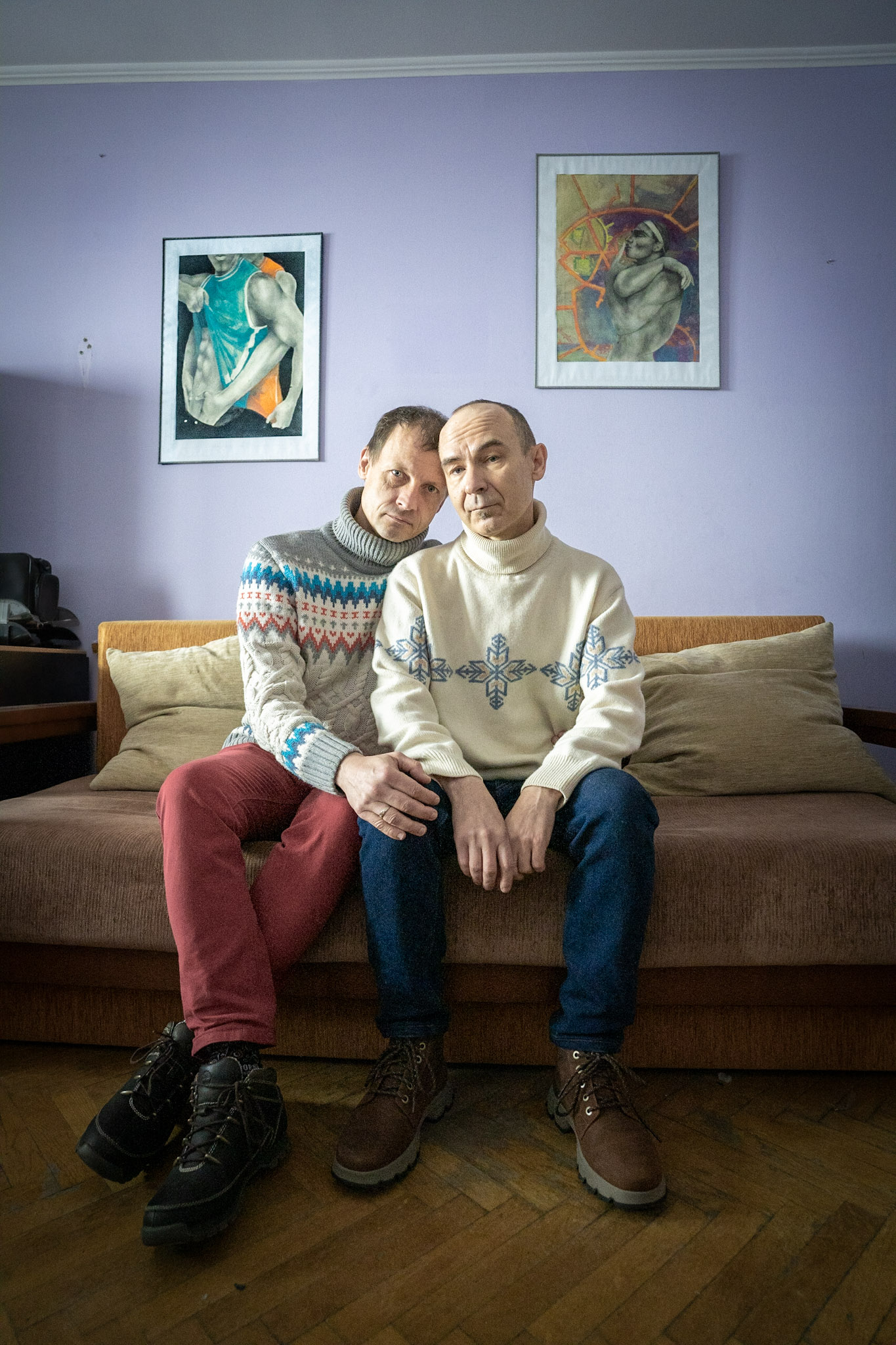
Yurii Ochichenko (left) met Andrii Kravchuk, cofounder of Nash Svit, one of Ukraine’s first gay and lesbian human rights groups, in Luhansk in 1995. After Russian forces declared a “People’s Republic” there in 2014, the couple settled in Kyiv. On the fourth day of Russia’s 2022 invasion, members of a Ukrainian defense unit showed up at their home, identifying themselves as part of a right-wing paramilitary group that had harassed Nash Svit for years. Ochichenko and Kravchuk were taken to a police station, where cops beat them, saying they weren’t “real Ukrainians.” “There are only two options,” Kravchuk told me. “The country will be free and democratic and any kind of people will be able to live here, or it will be a dictatorship.”
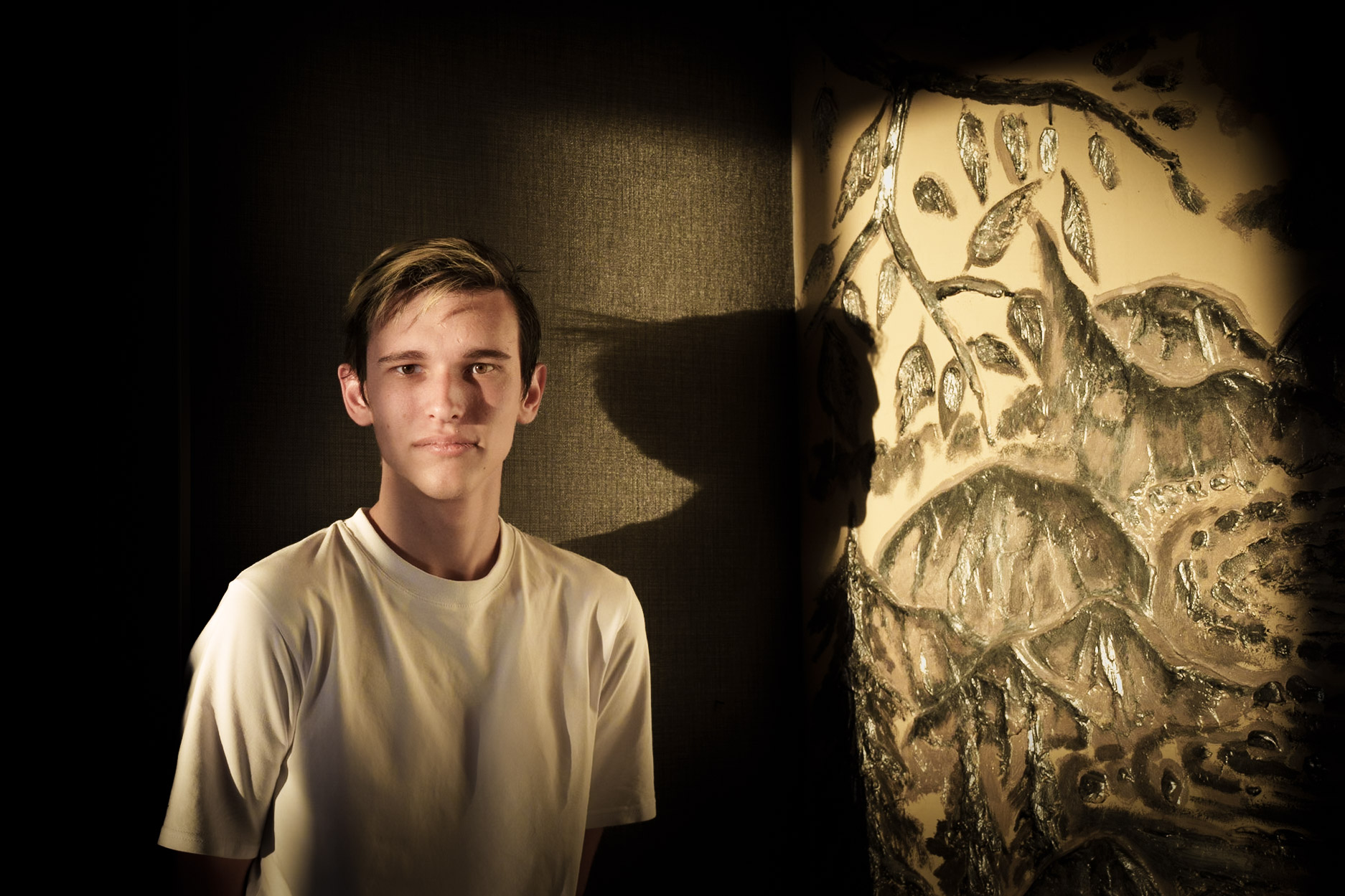
Russian soldiers stopped Oleksii Polukhin at a checkpoint in May 2022, two months into the occupation of Kherson. They forced him to unlock his phone, saw he had been gathering information about Russian military positions, and found LGBTQ+ Telegram channels. They stripped him naked on the street, purportedly to search for pro-Ukrainian tattoos. “What’s your opinion about faggots in our city?” Polukhin told me they called out to a passerby. “All of them should be killed!” the man replied. Polukhin was beaten and held in a detention center, where guards brought him a dress. “Wear it or we will beat you to death,” he says they told him. Repeatedly interrogated over the next year, he was one of 200 victims in a case brought in Ukrainian court against seven Russian soldiers for violating the laws of war.
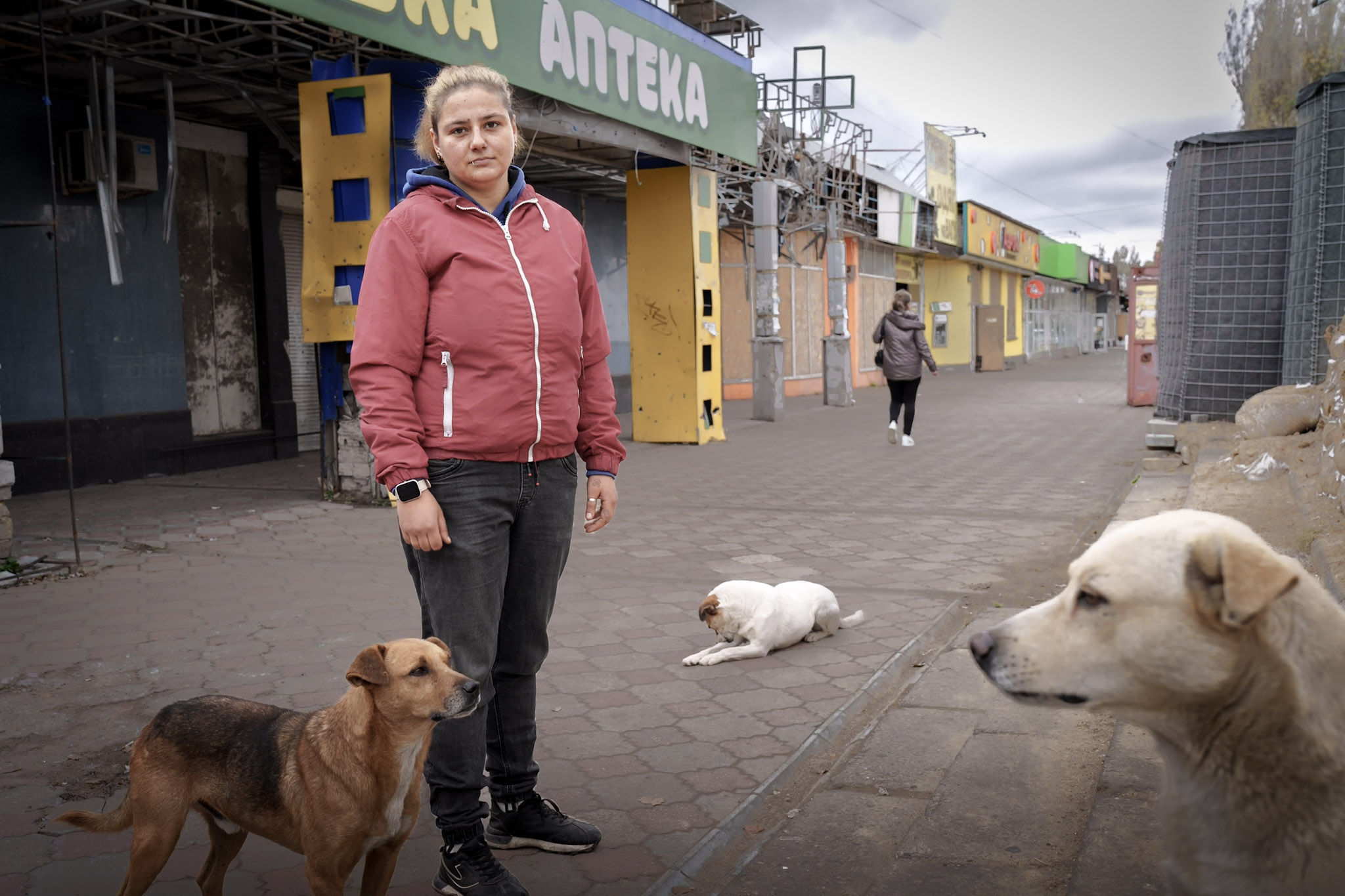
I met Diana, fond of taking in strays, in late 2023, nearly a year after Ukrainian forces liberated Kherson. She recounted being detained and tortured after Russian soldiers confronted her in June 2022, demanding she get a Russian passport. When she was defiant, they ransacked her home and learned she was gay. A soldier hit and blindfolded her; they took her to a detention center, where, she told me, they beat and electrocuted her before ultimately releasing her with orders to spy. She was detained again four months later, when she says she narrowly survived a mass execution. “The fear is permanent,” she told me. But, she added, “I will not leave the city. This place is mine.”
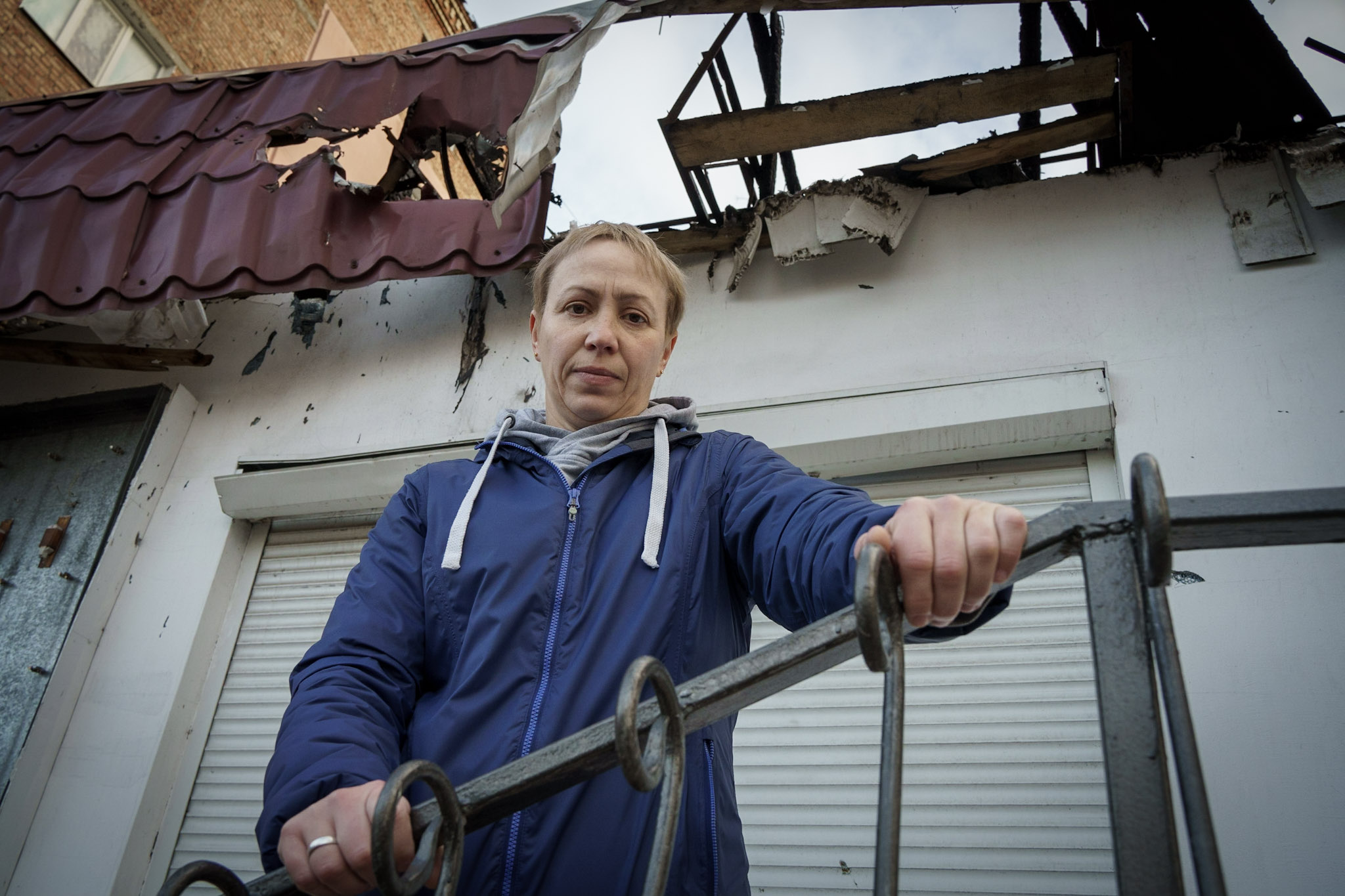
After the 2022 invasion, Oksana’s queer friends fled Mykolaiv, but she stayed to care for her disabled sister and bed-ridden parents. I met her when she was working with Gay Alliance Ukraine to open a shelter and humanitarian relief hub, especially for those fleeing from nearby Kherson, which Russian forces captured in the early days of the invasion. No one would rent her a space. One landlord walked away just before they signed the lease, she said, after learning it was for an LGBTQ+ organization. “I’m not afraid of anything,” she said. “It’s never too late to change things.”
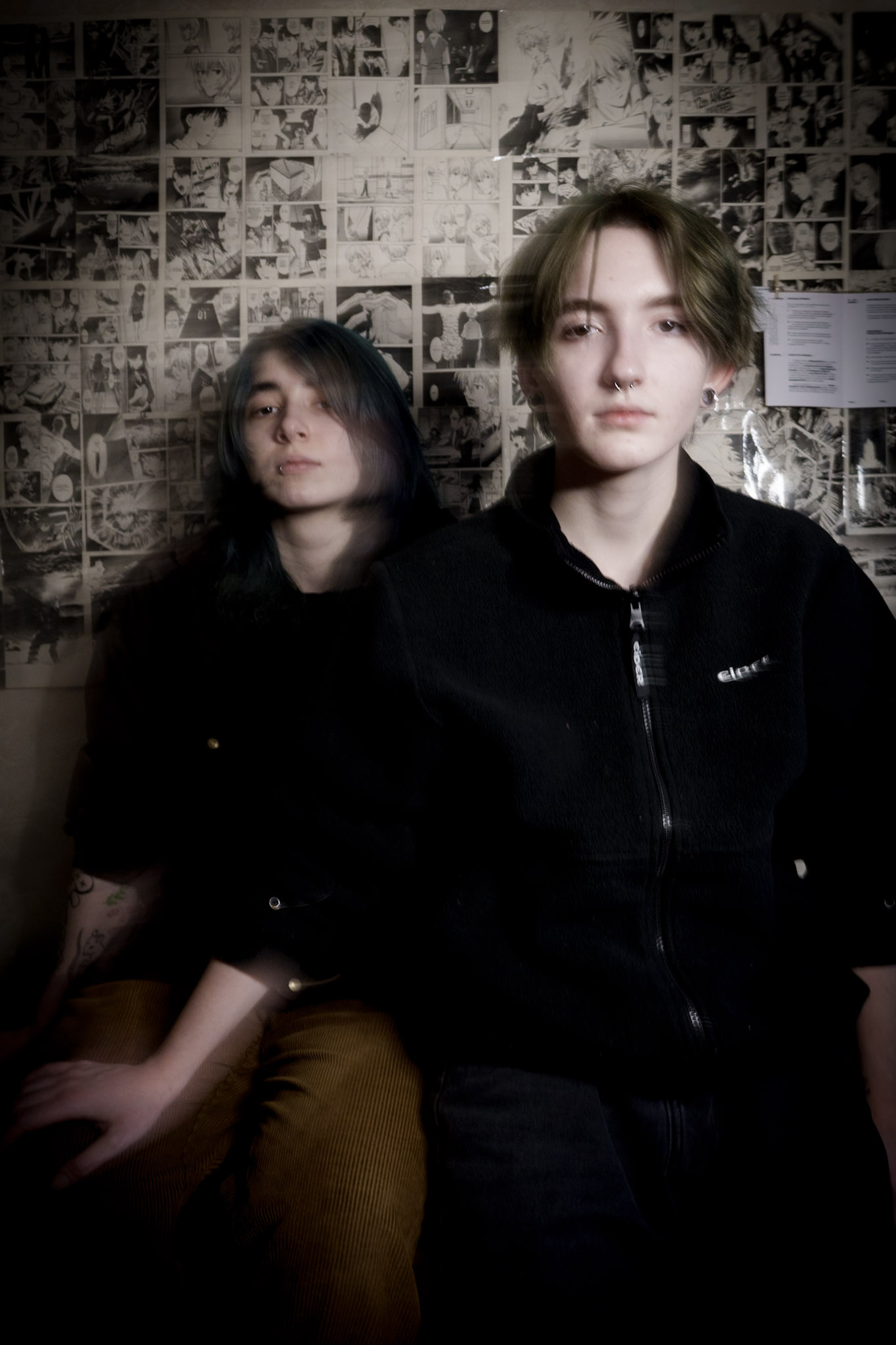
Sasha (left) and Adam, both trans, met in Moscow after their parents moved from Russian-occupied Ukraine in early 2022. Adam feared Russia’s anti-LGBTQ+ laws and was terrified his family members would find out. “I think they would have sent me to a monastery for ‘reeducation,’” he told me. With the help of a former teacher, the two fled to Kyiv. Border guards became hostile after hearing them speak Russian. Searching their phones, the guards discovered the teenagers were a couple. “Gay people are sick—why are you coming to our country?” they said. “Go to Gayropa.”
This essay is adapted from The Queer Face of War, published by Verlag Kettler in February.
Independent and nonprofit, Boston Review relies on reader funding. To support work like this, please donate here.