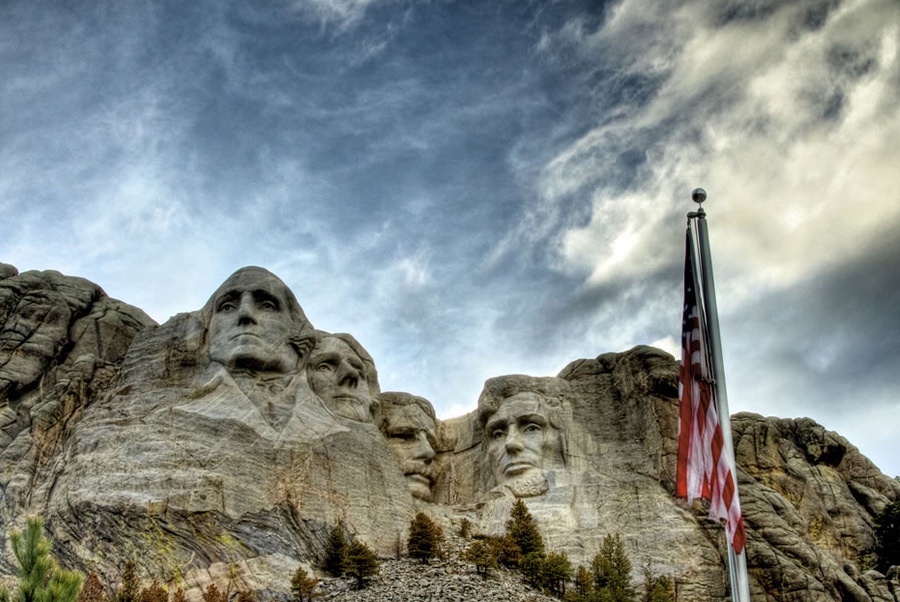
Ahead of July 4, this week’s reading list examines the meaning and limits of American patriotism—including Martha Nussbaum’s influential 1994 forum, with responses by Anthony Appiah, Judith Butler, Arthur Schlesinger Jr., Immanuel Wallerstein, and many others; Claudio Lomnitz’s lacerating dissection of Samuel Huntington’s account of American identity; essays by U.S. historians Robin D. G. Kelley, David Waldstreicher, Steven Hahn, Barbara Clark Smith, Alfred F. Young, William Hogeland, and Nikhil Pal Singh on the American Revolution and beyond; interviews with two of American empire’s fiercest critics, Noam Chomsky and Arundhati Roy; and more.
American Soup
The basic principle of Samuel Huntington’s patriotism: never recognize that anything of substance comes from somewhere besides Anglo-Protestantanism.
How to Think About Empire
An interview with Arundhati Roy on censorship, storytelling, and her problem with the term “postcolonialism.”
Founding Fathers, Founding Villains
As soon as there was a Constitution, fights about its meaning began.
The Hidden Stakes of the 1619 Controversy
Critics obscure a longstanding debate within the field of U.S. history over the implications of the American Revolution.
The Long American Counter-Revolution
Historian Gerald Horne has developed a grand theory of U.S. history as a series of devastating backlashes to progress—right down to the present day.
“The People Really Have the Power”
Noam Chomsky on the Capitol coup attempt, 2020 unrest, and the Biden administration.
The Radical Lives of Abolitionists
Many took part in other radical movements—including Free Love, which promoted women’s independence and an end to traditional marriage.
The Pervasive Power of the Settler Mindset
More than simple racism or discrimination, it is built upon violent elimination.
Get our newsletter
Vital reading on politics, ideas, and culture to your inbox

A political and literary forum, independent and nonprofit since 1975
Registered 501(c)(3) organization
Help Us Stay Paywall-Free
Become a Member