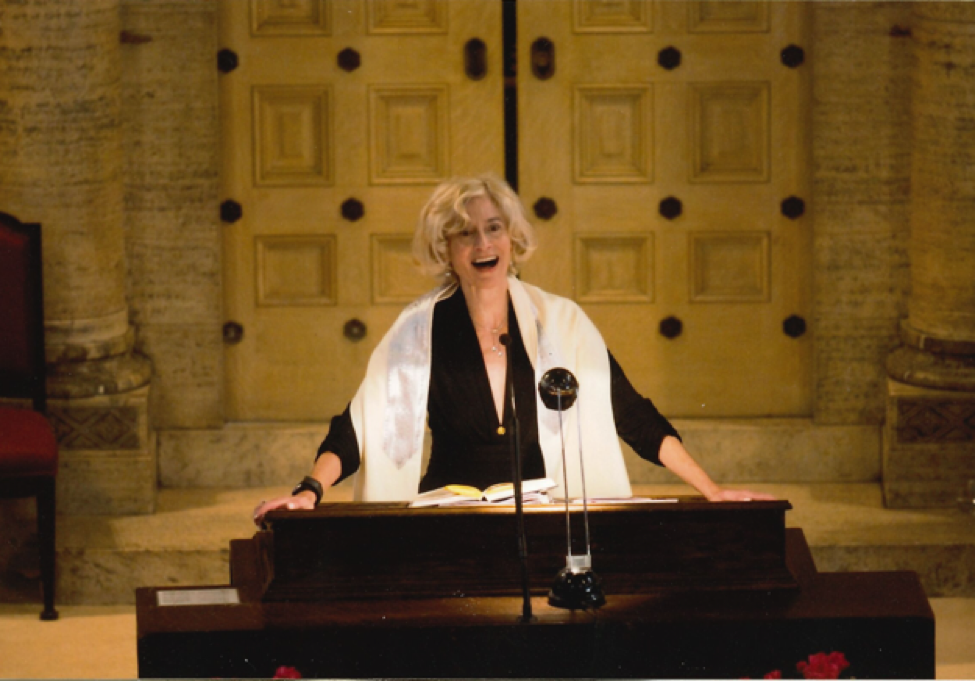
We are thrilled to hear that regular Boston Review contributor Martha Nussbaum is the recipient of the 2021 Holberg Prize! A prestigious international honor, the Holberg Prize is awarded annually to a scholar who has made outstanding contributions to research in the humanities. “Truly a ‘public philosopher’, Nussbaum’s work has reached wide audiences across the world as well as influenced many areas of knowledge,” the selection committee commented. “Her writing is always scrupulous about arguments, perceptive about human emotions and vulnerability, and attentive to the realities of human situations, social interactions, and the many forms of dependence and interdependence that can arise within them.” Congratulations, Martha!
This news coincided with the celebration of International Women’s Day earlier this week, which is itself the capstone of Women’s History Month. To mark these occasions, today’s reading list highlights women thinkers from a range of philosophical traditions. The list includes Boston Review favorites Agnes Callard and Seyla Benhabib—on decision-making and philosophical truths respectively—as well as political philosophers Elizabeth Anderson and Katrina Forrester looking at the history of social insurance and the future of Rawlsian liberalism.
Nussbaum and Danielle Allen represent the ethicists, looking at the relationship between mourning and justice and the importance of civic agency, and questions of moral philosophy come to the fore in essays by F. M Kamm and the inimitable Judith Jarvis Thomspon. While the latter is most famous for her ‘unconscious violinist’ thought experiment, here she pivots her arguments on abortion to the realm of rights, arguing that “the idea that a fetus has rights cannot be bypassed as nonsense. We have to take it seriously.”
Abortion: Whose Right?
The idea that a fetus has rights cannot be bypassed as nonsense. We have to take the idea seriously.
Judith Jarvis Thomson
with responses from
Donald H. Regan
Douglas Laycock
Drucilla Cornell
Peter de Marneffe
Philip L. Quinn
Taking Ideas Seriously
Can we distinguish political choices from philosophical truths?
Seyla Benhabib
What Is Education For?
Above all, preparing students for civic and political engagement.
Danielle Allen
with responses from
Carlos Fraenkel
Deborah Meier
Michel DeGraff
Debra Satz
Lelac Almagor
Jeffrey Aaron Snyder
Lucas Stanczyk
Rob Reich
Clint Smith
Embryonic Stem Cell Research
A moral defense.
F. M. Kamm
Common Property
How social insurance became confused with socialism.
Elizabeth Anderson
The Logic of Misogyny
Moralistic or not, misogyny is not about hating women. It is about controlling them.
Kate Manne
with responses from
Imani Perry
Susan J. Brison
Amber A'Lee Frost
Christina Hoff Sommers
Doug Henwood
Tali Mendelberg
Vivian Gornick
The Future of Political Philosophy
For five decades Anglophone political philosophy has been dominated by the liberal egalitarianism of John Rawls. With liberalism in crisis, have these ideas outlived their time?
Katrina Forrester
Don’t Overthink It
A new book wants us to navigate life’s crossroads with the precision of a military exercise. But personal decisions are more difficult than even the most consequential political decisions.
Agnes Callard
The Mourner’s Hope
Martha Nussbaum’s bat mitzvah talk, on grief and the foundations of justice.
Martha C. Nussbaum
trending_flat
Get our newsletter
Vital reading on politics, ideas, and culture to your inbox
A political and literary forum, independent and nonprofit since 1975